
The system
Impact Pro is a commercial algorithm sold by Optum, part of UnitedHealth Group. It predicts which patients will need the most care and automatically enrols the highest-scoring ones in extra care-management programmes. It was trained to predict future healthcare costs, on the assumption that cost reflects need.
What happened
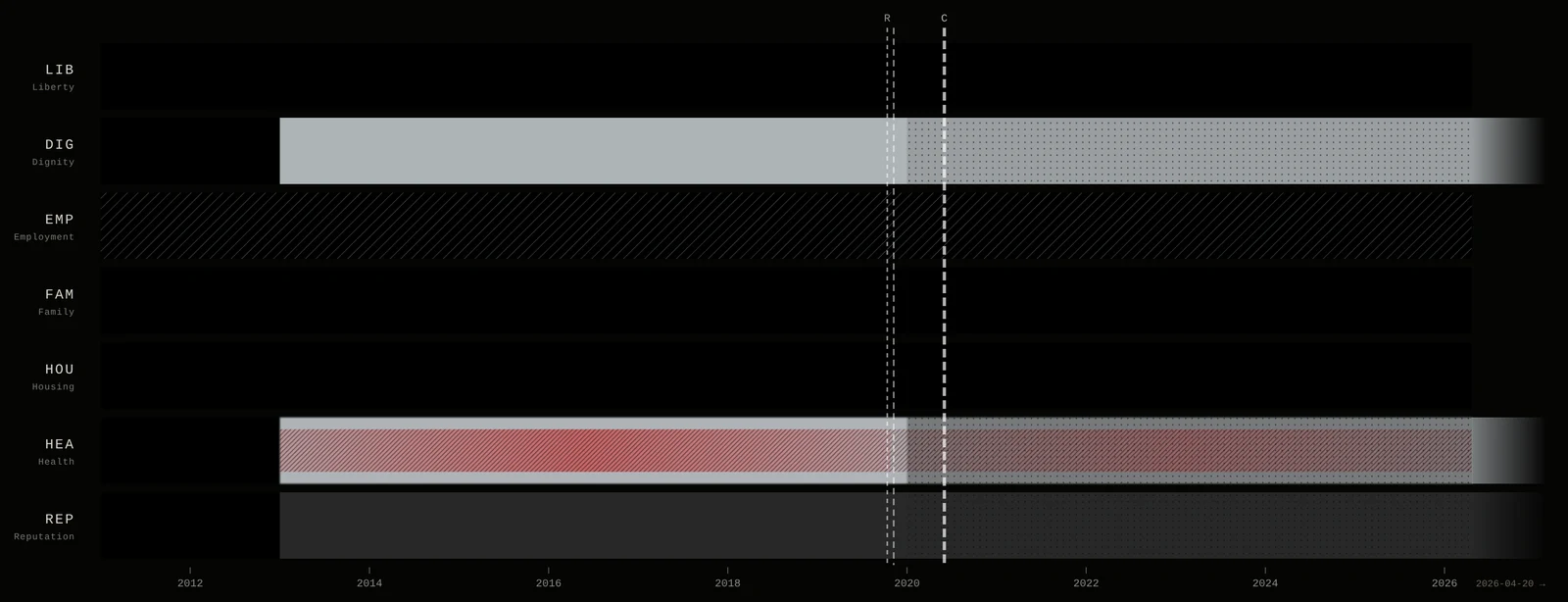
In October 2019 a team led by Ziad Obermeyer published an audit in Science, based on records of 49,618 patients at one academic hospital (2013–2015). At the same risk score, Black patients were considerably sicker than white patients. The cause was the training target. Black patients with the same conditions had historically received less care and so generated lower costs, which the algorithm read as lower need. Of the patients automatically enrolled for extra care, 17.7% were Black. Without the bias the figure would have been 46.5%. The authors estimated that algorithms of this kind are applied to about 200 million people in the United States each year.
The same day, New York State’s financial and health regulators wrote to UnitedHealth that the outcome was discriminatory and unlawful in New York. No enforcement followed. In 2020 Optum worked with the researchers on a corrected model, which cut the measured bias by about 84% on a test dataset of 3.7 million patients. It has never been publicly confirmed that the correction was applied to the product in use. Impact Pro was still on sale in 2026.
What the record shows
The harm sits in two places. Health is at 8: a peer-reviewed study shows sicker patients were denied extra care, but the illness and deaths that followed were never counted. Dignity is at 7: systematic racial disadvantage at scale, capped because the people affected never learned of it. Reputation is minimal (1). Liberty, family and housing show no documented harm. Employment is marked as insufficiently documented.
Nobody harmed by this system was informed. There is no class action, no testimony from patients and no named person affected. Among the six cases this one has the least visible victims.
A probabilistic mark of no remedy appears on health: the irreversible outcomes are estimated from the mechanism, not counted.
Reading the plate
The pupil is empty, which marks a machine-learning system with no readable rules. The iris uses the clinical palette and is drawn at global scale. The red ring is blurred because the outcomes are estimated. The stars are fainter and more numerous than on other plates, for people affected without knowing it. No coordinates are printed because the system is not tied to one place.
Key sources
- Obermeyer, Powers, Vogeli, Mullainathan, “Dissecting racial bias in an algorithm used to manage the health of populations”, Science 366 (2019), doi:10.1126/science.aax2342
- New York State Department of Financial Services and Department of Health, letter to UnitedHealth Group, 25 October 2019
- Benjamin, “Assessing risk, automating racism”, Science 366 (2019)
- FTC, CFPB, DOJ Civil Rights Division and EEOC, joint statement on automated systems, April 2023