
The system
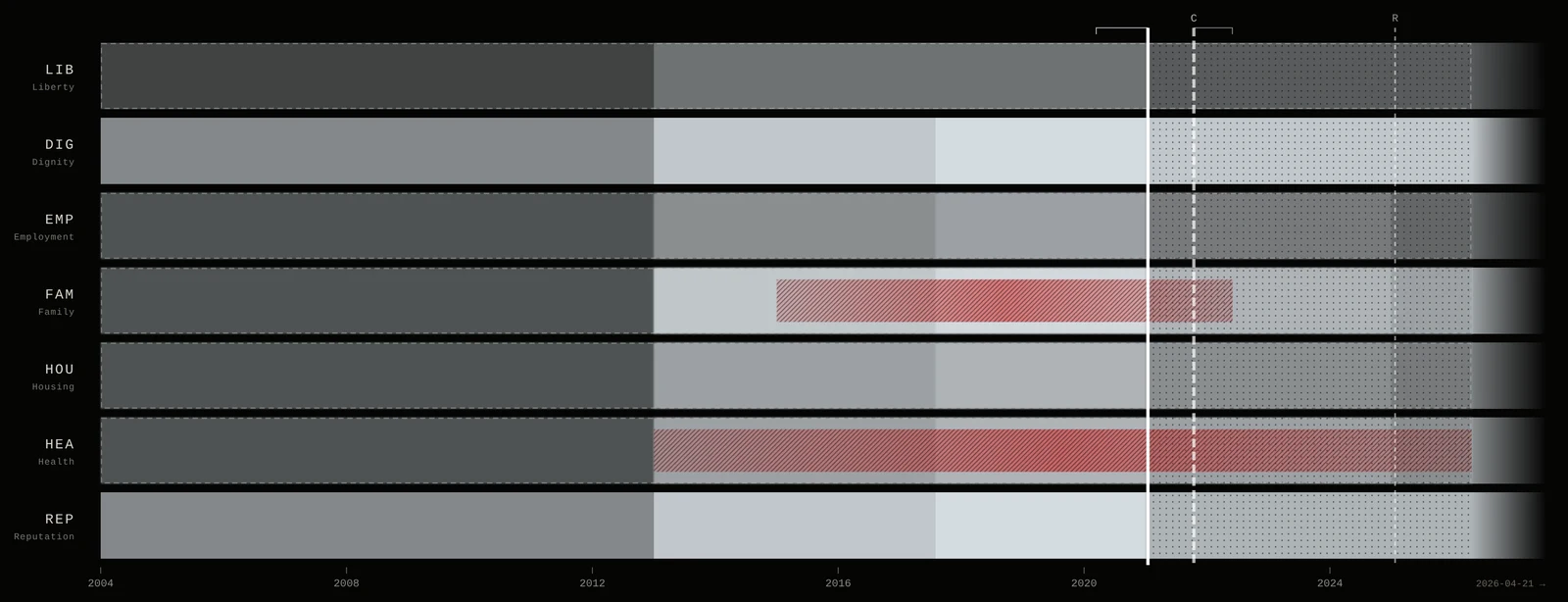
For more than ten years the benefits office of the Dutch tax administration used a fraud-risk classification for childcare benefit. Its rules counted dual nationality and non-Dutch nationality as risk factors. Flagged families were told to repay everything they had received, often for several years at once. Some demands were over €100,000 per household. A separate internal list recorded people as suspected fraudsters and passed that label to other parts of the state. Neither the list nor the use of nationality had a proper legal basis.
What happened
The national ombudsman warned in 2017 that the process was unfair. Journalists made the story public in September 2019. A government advisory committee acknowledged disproportionate enforcement in March 2020. In December 2020 a parliamentary inquiry published Ongekend Onrecht (“Unprecedented Injustice”), finding that basic principles of the rule of law had been violated. The Dutch cabinet resigned on 15 January 2021.
In December 2021 the Data Protection Authority fined the tax authority €2.75 million for its discriminatory use of nationality in the benefits process. In 2022 it fined it another €3.7 million for the fraud list. In May 2022 the government formally acknowledged institutional racism within the tax administration, the first such admission by the Dutch state about this system. A second parliamentary inquiry, in January 2025, found similar problems in fraud policy across government.
Where it stands
A national repair programme has run since 2021. By 30 June 2026 about 69,700 parents had registered and 44,045 had been confirmed as harmed. The government reports that the last individual assessments were finished at the end of 2025, with a few cases still open; parts of the programme continue into 2027. Parents’ organisations say the official recognition has not been followed by real repair.
What the record shows
This is the most severe record in the series. Family harm is at the top of the scale (10). Statistics Netherlands counted 2,090 children of affected families placed outside the home between 2015 and mid-2022, of whom 645 were still outside the home at the last count. The statistics office notes that not every placement was caused by the scandal, and the record carries that caveat. Dignity and reputation are at 9, based on the state’s own admission of institutional racism. Housing and health are at 8, employment at 7, and liberty at 4: years of administrative pressure, without mass imprisonment.
Two marks of no remedy appear: on health, for the documented mental-health crisis, and on family, for the children who were not returned.
No child is identified anywhere in this record.
Reading the plate
The lines in the pupil mean a rule-based system. The bright iris means a very well documented case. The red ring is softer than in SyRI because the harm here travelled through long chains (debt, eviction, illness, child protection) and each link is less certain.
Key sources
- Parlementaire ondervragingscommissie Kinderopvangtoeslag, Ongekend Onrecht, 17 December 2020
- Autoriteit Persoonsgegevens, fines of December 2021 and April 2022
- Government letter to Parliament acknowledging institutional racism, 30 May 2022
- CBS, children of affected parents placed outside the home, 2022
- Parlementaire enquêtecommissie Fraudebeleid en Dienstverlening, Blind voor mens en recht, 23 January 2025
- 23rd progress report on the benefits repair programme, reference date 30 June 2026, sent to Parliament 18 September 2026