
The system
Robodebt, officially the Online Compliance Intervention, used no artificial intelligence. It took each welfare recipient’s yearly income from the tax office, divided it by 26 and compared the result with the income the person had reported for each fortnight. Any difference became a debt. Letters went out automatically, asking for repayment or proof for periods up to six years back. Unanswered debts were passed to private collection agencies, and tax refunds were taken.
The method gave wrong results for anyone whose income varied: seasonal workers, carers, students, people moving in and out of work. It also shifted the burden of proof. The state no longer had to establish a debt; people had to disprove one. Government lawyers had warned in 2014 that this was legally doubtful, and the scheme went ahead anyway.
What happened
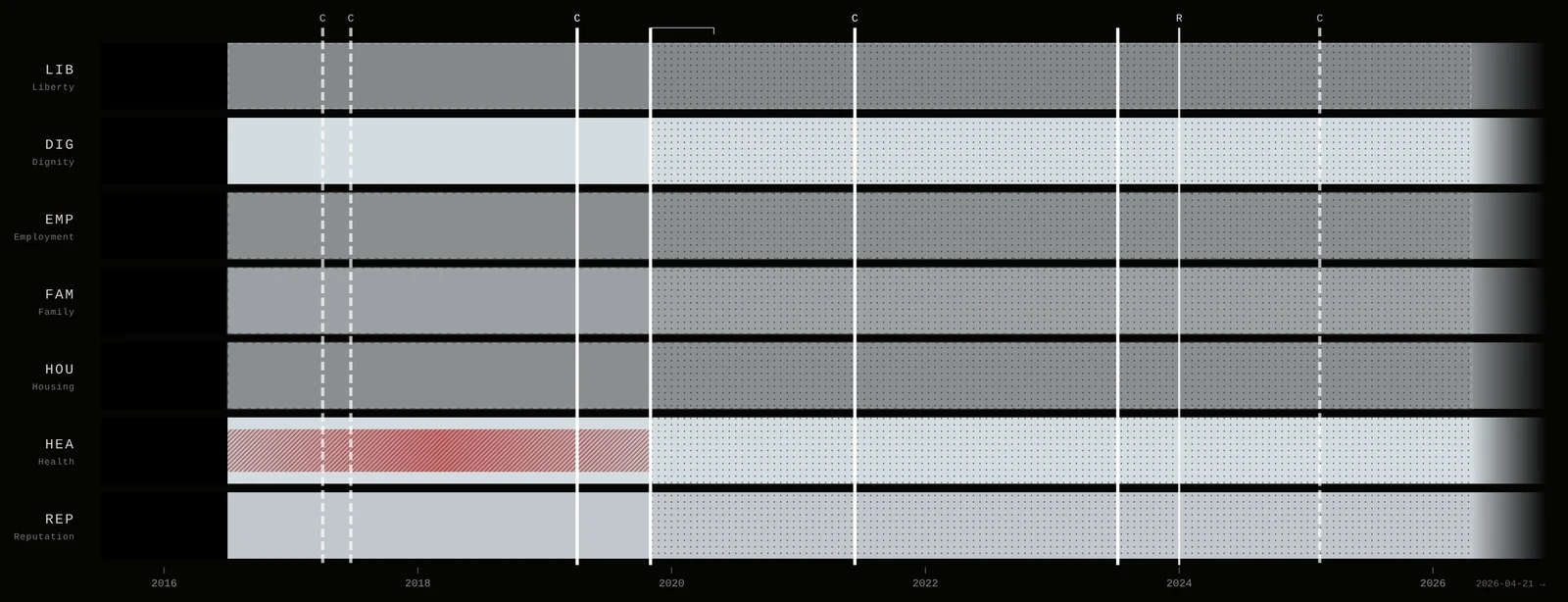
From March 2017 the administrative tribunal found the method unlawful in individual cases. The government did not appeal or publish these decisions, and the scheme continued. The Commonwealth Ombudsman and a Senate committee raised concerns in 2017. In 2019 the Ombudsman found that the scheme was running on legally insufficient information. It was paused in November 2019, and in May 2020 the government agreed to refund about A$721 million.
In June 2021 the Federal Court approved a class-action settlement worth about A$1.8 billion. About 433,000 people had received debts, and A$751 million had been wrongly taken from 381,000 of them.
A Royal Commission reported in July 2023. It found the scheme unlawful from the start and found that the department had misled the Ombudsman. It also heard from families who linked the deaths of relatives to the scheme. In March 2026 Australia’s anti-corruption commission found that two former senior public servants had engaged in serious corrupt conduct: one misled the Cabinet budget process in 2015, the other misled the Ombudsman in 2017. Neither was referred for prosecution because the commission did not have enough admissible evidence.
What the record shows
Harm is recorded on all seven dimensions. Dignity and health are at 9: the first for a population treated as presumed cheats, the second for the deaths recorded by the Royal Commission. Reputation is at 8, family at 7, employment and housing at 6, liberty at 5.
A mark of no remedy appears on health. The plate carries a dagger because the Royal Commission’s public record attributes deaths to the scheme. No one who died is named in this work.
The scheme was a division and a comparison. Its severity came from the legal and administrative process the formula was placed in, not from the technology.
Reading the plate
The pupil holds horizontal lines, as in SyRI and the Toeslagenaffaire: a rule-based system. The iris is at its brightest, since the Royal Commission produced one of the most complete public records of any automated government system. The red ring is sharp.
Key sources
- Royal Commission into the Robodebt Scheme, Final Report, 7 July 2023
- Federal Court of Australia, Prygodicz v Commonwealth of Australia (No 2) [2021] FCA 634, 11 June 2021
- Commonwealth Ombudsman, reports of April 2017 and April 2019
- Senate Community Affairs References Committee, report of 21 June 2017
- National Anti-Corruption Commission, Operation Myrtleford investigation report, March 2026